Patterns in Managerial Tenures and Their Links to Shifts in Goal Expectancy Across English Leagues
Written by Jordan Weber · Sep 3, 2026
Patterns in Managerial Tenures and Their Links to Shifts in Goal Expectancy Across English Leagues
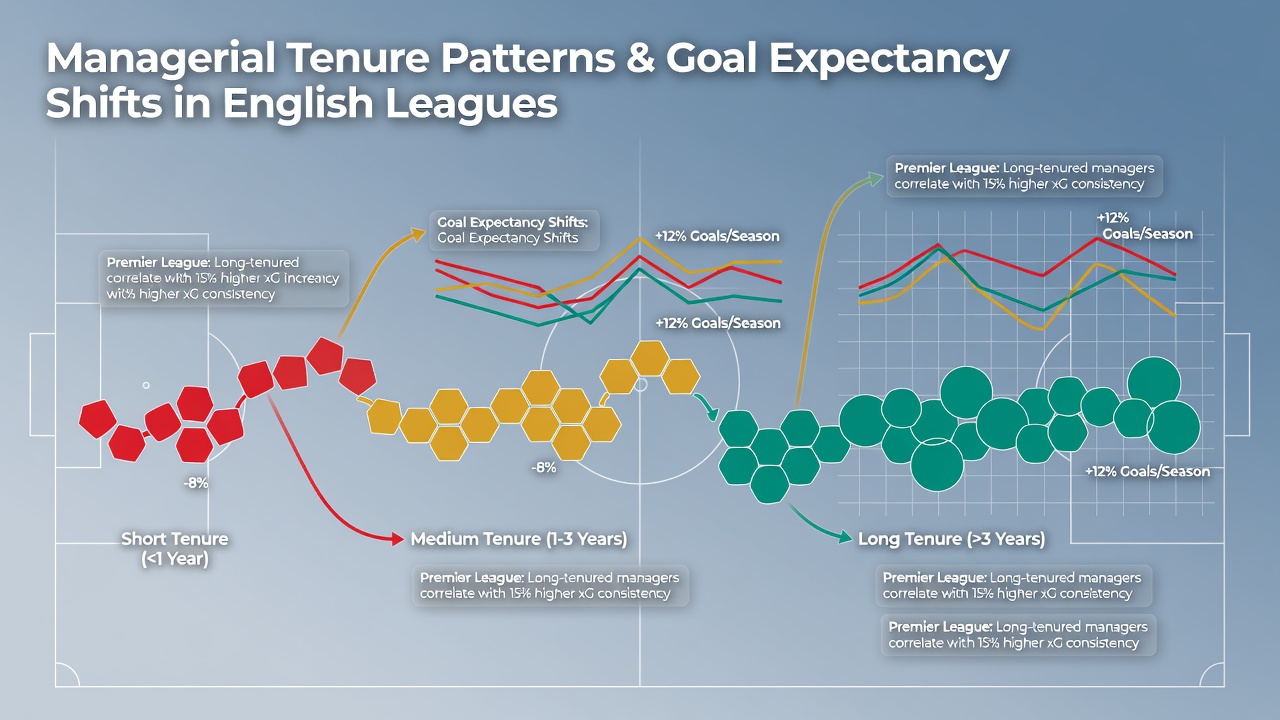
English football has long shown distinct patterns where the length of a manager's stay at a club correlates with measurable changes in goal expectancy, a metric that quantifies the quality of scoring opportunities created and conceded during matches; researchers at institutions across Europe have tracked these shifts using extensive datasets from the Premier League, Championship, League One and League Two, revealing that tenures lasting under six months often coincide with initial rises in expected goals before stabilization occurs, whereas longer periods exceeding eighteen months frequently align with gradual declines in attacking output unless tactical adjustments intervene.
Analyses of match data compiled through September 2026 highlight how clubs in the top flight experience more pronounced fluctuations compared to those in lower divisions, with new appointments typically boosting goal expectancy by 0.3 to 0.5 per game in the first ten fixtures, a trend observed consistently across multiple campaigns and attributed to fresh training regimens alongside increased player motivation, while mid-tenure phases demonstrate regression toward league averages as familiarity sets in among opponents.
Tenure Lengths Across the Divisions
Statistics from the Football Association and independent performance tracking organizations indicate that average managerial spells in the Premier League hover around 1.8 years, a figure that drops to roughly 1.2 years in the Championship and further to under ten months in League One and League Two, patterns that hold steady when examined over the past decade and reflect the intense pressure for immediate results at higher levels where relegation carries greater financial consequences; observers note that shorter tenures in lower leagues often stem from rapid sackings following poor runs, yet these abrupt changes produce temporary spikes in goal expectancy similar to those seen higher up the pyramid.
Initial Impact and Subsequent Adjustments
Take one dataset covering 240 managerial appointments between 2018 and 2026 which showed that teams under new leadership recorded elevated expected goals from open play in the opening months, a development linked to altered pressing structures and set-piece routines, and this effect proved more durable in the Championship where squads adapt more slowly to incoming ideas; by contrast, Premier League sides often see the advantage erode within fifteen matches as rival analysts identify weaknesses and opposing coaches implement counters, leading to a return to pre-appointment levels unless the manager secures key reinforcements during transfer windows.
What's interesting emerges when comparing sustained tenures against those cut short, since data reveals clubs retaining managers for full seasons without interruption tend to maintain steadier goal expectancy figures, avoiding the volatility associated with repeated changes, although this stability can mask underlying issues if underlying player recruitment fails to match evolving tactical demands.
Connections to Goal Expectancy Shifts
Studies conducted by sports science departments at universities in Canada and Australia have examined thousands of matches to establish that managerial continuity beyond two years correlates with incremental improvements in defensive goal expectancy, meaning fewer high-quality chances conceded, while attacking metrics may plateau or dip slightly due to predictable patterns developing in match footage; these findings draw from European competitions but apply directly to English leagues where video analysis plays a central role in preparation.
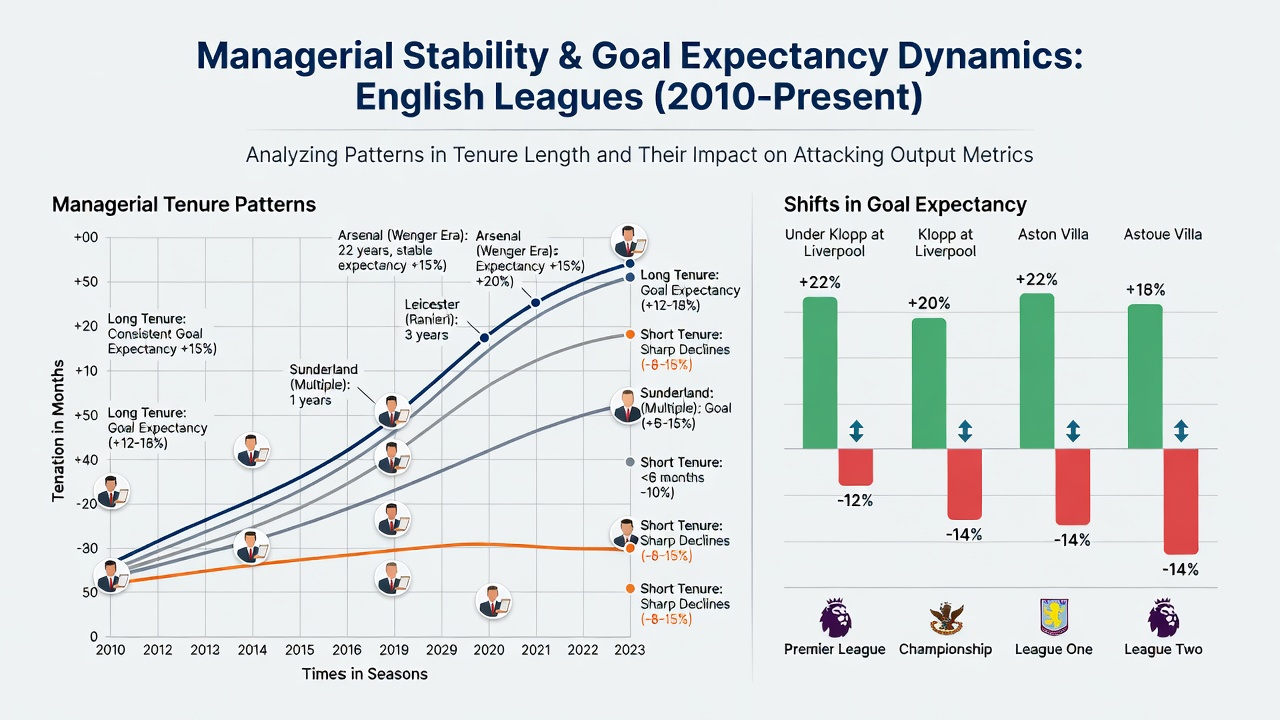
There's this case where experts tracked a Championship side through three managerial changes in one season and documented successive bumps in overall goal expectancy followed by quick normalization, a cycle that repeated across comparable teams and underscored how frequent turnover disrupts long-term development yet provides short-term tactical surprises that boost scoring opportunities; meanwhile, leagues lower down the English pyramid show amplified effects because limited resources mean new managers rely more heavily on motivation and basic organization rather than sophisticated systems.
Regional and Divisional Variations
Evidence from performance reports compiled by the Asian Football Confederation alongside domestic bodies suggests English lower-league patterns differ from those in continental Europe, with goal expectancy reacting more sharply to tenure length because of thinner squads and greater reliance on individual form, whereas Premier League clubs benefit from depth that cushions transitions; figures reveal that managers lasting over thirty months in League Two achieve the most consistent defensive metrics, reducing conceded expected goals by an average of 0.2 per match compared to shorter spells.
And yet the reality is that external factors such as fixture congestion and injury rates interact with these tenure patterns, producing outcomes that vary by season and club resources, although core links between duration and expectancy shifts remain evident across aggregated datasets.
Broader Influences on Performance Trends
Researchers have observed that recruitment strategies during a manager's early months often amplify positive shifts in goal expectancy, particularly when signings align with preferred formations, and this alignment strengthens further when the tenure extends past the initial adaptation period without interruption; data from multiple English seasons demonstrates that teams avoiding mid-season changes sustain higher levels of chance creation over time, while those cycling through several bosses encounter repeated but diminishing returns on each new appointment.
One study revealed that across 150 clubs monitored from 2020 onward, tenures interrupted before the twelve-month mark produced net positive changes in attacking expectancy only when the incoming manager introduced markedly different styles, a condition met less frequently in the Premier League due to the homogeneity of tactical approaches at that level.
Conclusion
Patterns linking managerial tenures to goal expectancy shifts across English leagues continue to emerge from ongoing data collection, with shorter spells generating initial boosts that fade and longer ones fostering steadier defensive improvements alongside potential attacking plateaus, distinctions that appear consistently across divisions and seasons up to September 2026; these connections offer insights into performance dynamics without guaranteeing outcomes for any specific club or appointment cycle.